
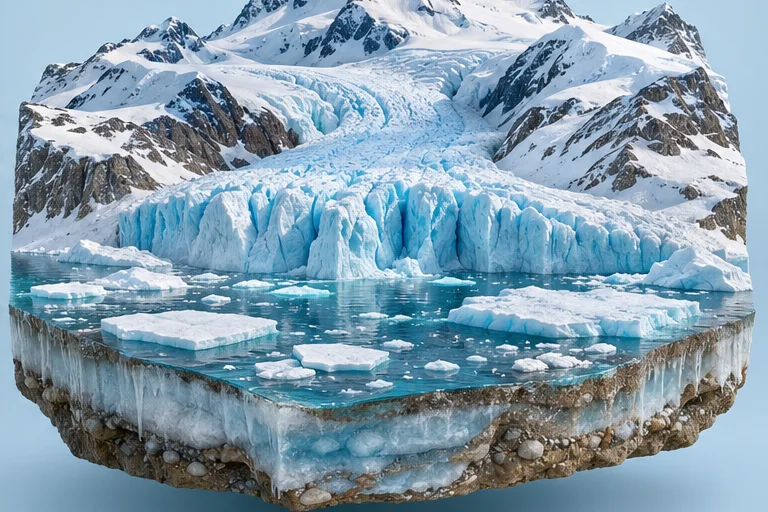
Earth’s frozen regions have moved beyond a proposed safety boundary
A study in Science finds that ice on land and at sea, snow cover and permafrost have already moved, or are on course to move, beyond conditions that were relatively stable for thousands of years.
Earth’s glaciers, sea ice, snow and frozen ground are changing fast enough that researchers say they have moved collectively beyond a proposed safety boundary. The study, published in Science, used the relatively stable conditions of the past 11,700 years as a reference. Its assessment combines changes scientists have observed with further losses already set in motion.
The risks take different forms. Melting land ice raises sea levels. Shrinking mountain ice can alter the timing and availability of freshwater, and thawing permafrost can release greenhouse gases that add to warming.
The researchers propose the boundary as a way to track growing risks across Earth’s frozen regions. They identify human-caused warming as the main driver and call for cuts to greenhouse gas emissions and black carbon, the soot that can speed melting when it settles on snow and ice.
AI-generated image, a real photo in source
← News