
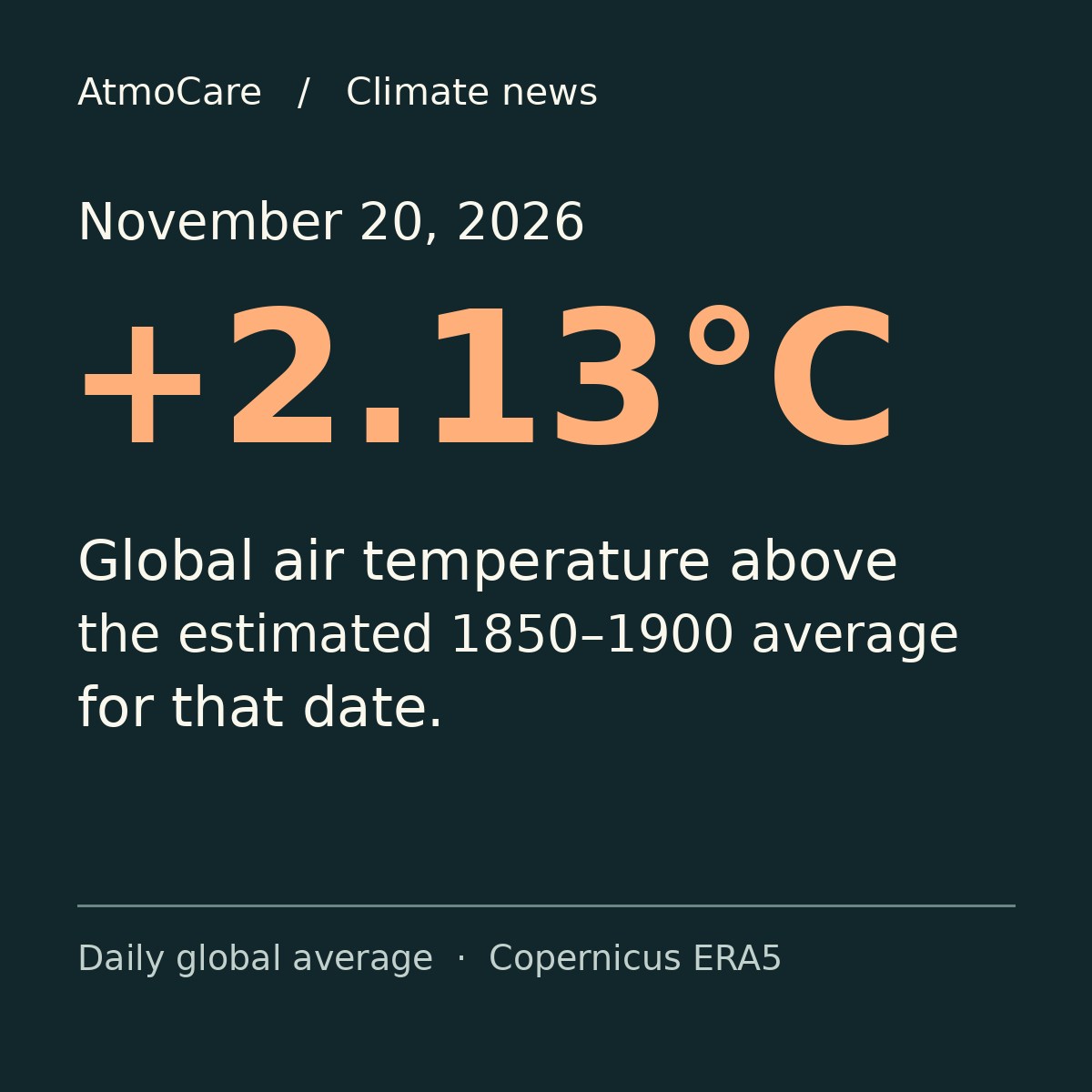
Earth’s average air temperature reached 14.44°C on November 20, 2026. For that date, the estimated average in 1850–1900 was about 2.13°C cooler. That difference is striking because it averages the air over the whole planet, across oceans and continents, day and night.
To see what broke the record, compare each day with its own seasonal average. In the Copernicus record, which starts in 1940, November 20 stood 1.23°C above the average for that date in 1991–2020. No earlier day in the series had risen as far above its own average. The gap climbed again on November 21, 22 and 23, reaching 1.34°C on the 23rd.
The two figures answer different questions. The 2.13°C figure uses the cooler preindustrial period. The 1.23°C figure compares the same day with a more recent climate. A July day can be hotter in degrees Celsius while a November day is more unusual for its season.
Climate targets track warming over decades. This daily record shows how far individual days can now rise above the temperatures typical of an earlier climate.
Explore the Copernicus Climate Pulse data or see the calculation against the preindustrial baseline.